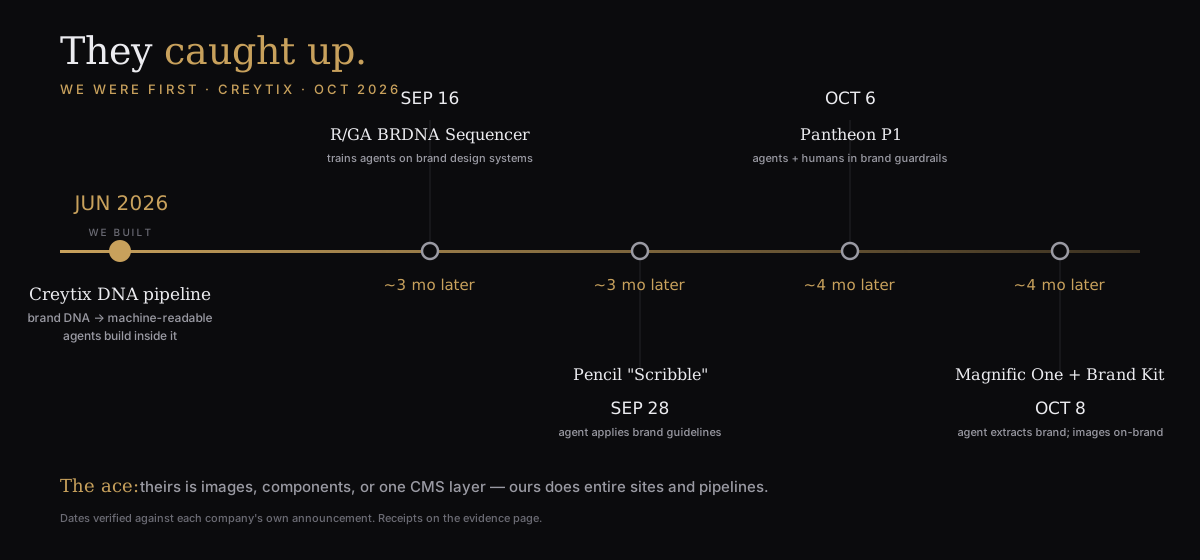
Convergence 01 · Brand DNA → machine-readable
R/GA's BRDNA Sequencer
What we built · June 2026
Our Website DNA ingestion pipeline: feed it a website, it extracts the design DNA, and we build and expand on the site without changing its identity. Plus machine-readable brand-DNA style kits — eight brand identities as data, not decks.
What they launched · Sep 16, 2026
BRDNA Sequencer — "a new product that trains AI coding agents directly on a brand's design system," converting brand DNA into "structured, machine-readable components that AI agents can not only comprehend but also remix and express creatively."
Source: R/GA press release, GlobeNewswire, Sep 16, 2026
~3months later
Where we are now
Theirs is a sequencer for components. Ours ships entire sites and pipelines — the DNA is the platform, not a plugin.
Convergence 02 · Guidelines → enforced across agents
Brandtech Pencil's "Scribble"
What we built · June 2026
Same architecture as above: brand guidelines in, machine-readable rules out, enforced across AI agents and tasks. Our agents don't reference the brand — they build inside it.
What they launched · Sep 28, 2026
Scribble — an agent that "reads the intent of a prompt or brief, picks the right agents and skills, sequences the steps, and runs the job," "all while applying a brand's existing guidelines," with "enterprise brand compliance at the core."
Source: Brandtech Group press release, Sep 28, 2026 · Roastbrief coverage
~3months later
Where we are now
Theirs orchestrates marketing assets. Ours runs the whole build — sites, pipelines, products — on the same guidelines-as-code pattern.
Convergence 03 · Agents building inside brand guardrails
Pantheon's P1
What we built · June 2026
The same DNA pattern as a working method: AI agents that build and evolve web experiences inside the brand's own machine-readable design system — the guardrails are the brand, not a checklist.
What they launched · Oct 6, 2026
P1 — an "AI-native web composition layer" where "humans and AI agents jointly create and evolve web experiences within a shared set of operational and brand guardrails." Unveiled at their GoLive conference in Miami.
Source: Pantheon blog, Oct 2026 · CMSWire, Oct 6, 2026
~4months later
Where we are now
Same pattern. We had it four months earlier — and ours spans the whole platform, not just a CMS composition layer.
Convergence 04 · Ingest a brand → extract identity → generate inside it
Magnific One + Brand Kit
What we built · June 2026
The same ingest → extract → generate loop: hand the system a brand source, it pulls out the identity as machine-readable DNA, and everything it produces stays inside it.
What they launched · Oct 8, 2026
Magnific One + Brand Kit — "give it a website, a guidelines PDF, a few images or a written description, and an agent extracts the logo, palette, typography, imagery and tone into a first version of the kit," then the model applies it to every image it generates.
Source: PRNewswire, Oct 8, 2026 · Unite.AI
~4months later
Where we are now
Theirs is images. Ours does entire sites and pipelines. Different ceiling, same idea — and the idea was ours first.